
Painting with plant ghosts
Can a colour be alive, even when it is dead?
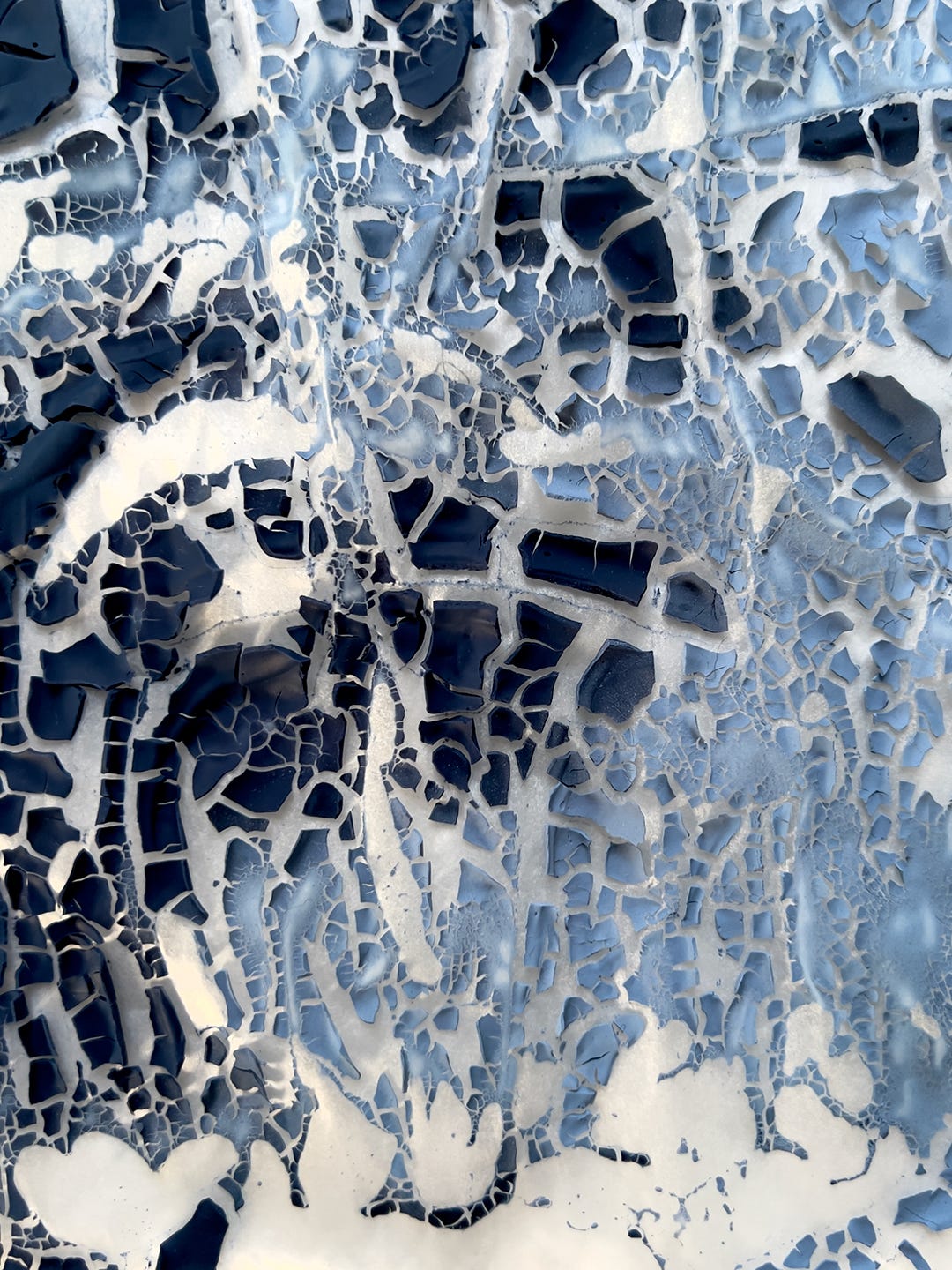
Colours made from plants fade inevitably. Sometimes the colour fades in hours, days. The longest lasting plant pigments, carefully prepared, fade in decades. But they fade.
And I can’t help but love finding the hidden colours of plants, and to want to paint with them.
Jason Logan from the Toronto Ink Company calls the colour extracted from plants alive, connecting the changes the colour goes through on the page to the changes in a living being.
But I think the truth is plant colour is a dying thing.
When you make colour from plants, you are not usually making the same colour as the brilliantly coloured flowers while they are alive. Most colours in petals and leaves start the process of breaking down as soon as they are picked. Those are the deeply fugitive colours.
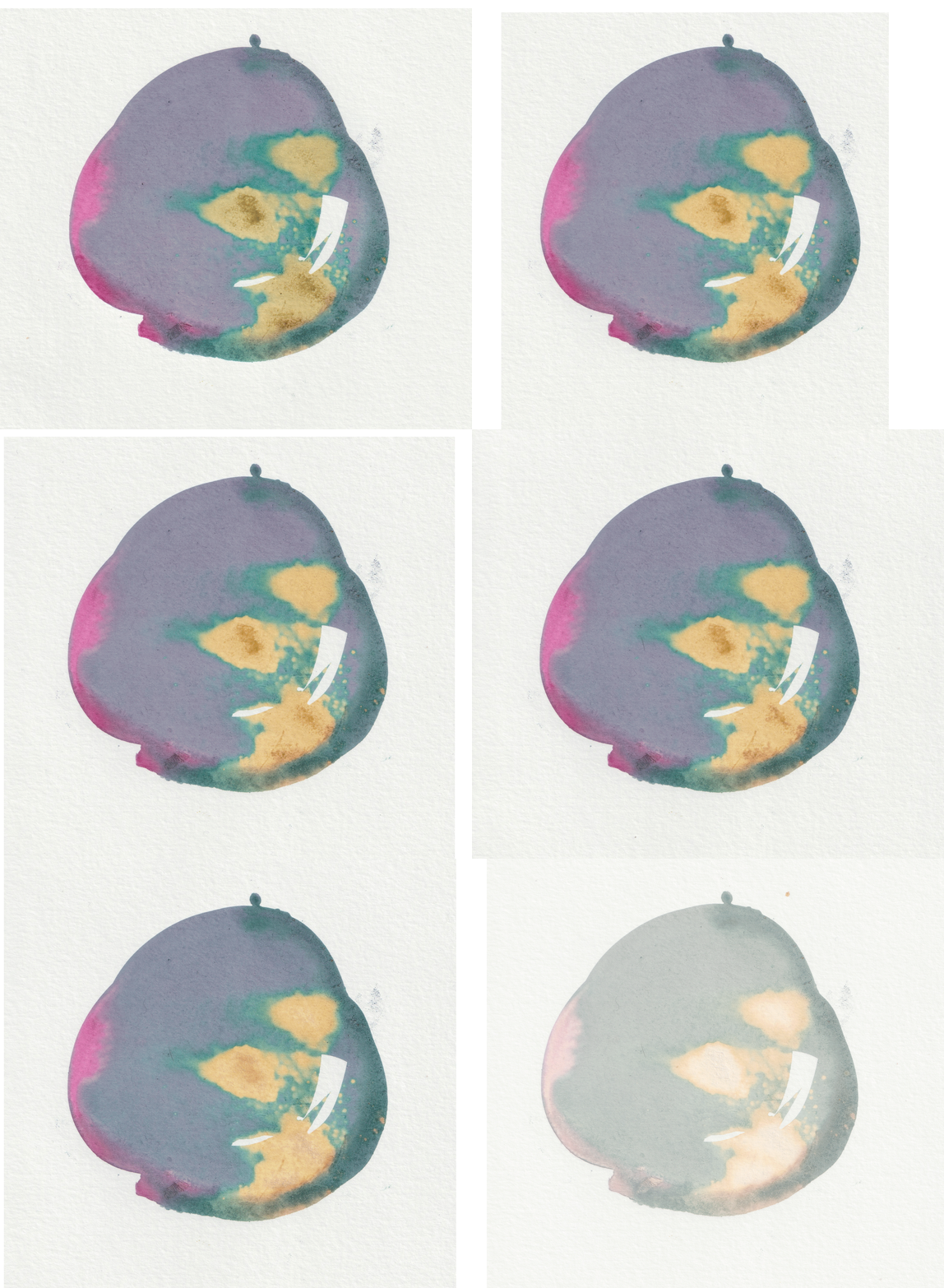
I’m using photos from making a lake pigment out of red cabbage, one of the brightest, most changeable and ultimately dullest grey of plant colours. I wanted to experience the changes.


Some plants have certain flavonoids in them - anthroquinones, luteins and anthrocyanins. On dying, the cell walls break down and the flavonoids are released. The juices are cooked up and the glucose chain is broken off the molecule. And only now, after accelerating the decay, the long lasting colours are finally fully visible.
These colourful pigments will keep on reacting with oxygen though, finally turning brown or grey. And UV will will keep on breaking down the molecule until it fades completely away.
So gradually the plant colours I have captured and put down on the page will fade away, leaving me with painted ghosts of colour.
It’s not so much the aliveness of plant inks - but they are changing, not stuck in a deathless synthetic stasis like modern industrial pigments are. These changes, this breaking down, is part of the same cycle of life and death that we are bound to inescapably
In Timor-Leste (East Timor) where I first learnt about plant colours (read more about that here), the Tetun language uses the same word for both ‘alive’ and ‘bright colour’. A muted colour is literally a ‘dead’ colour. Unsurprisingly, very bright colours are everywhere, and people tell me they can’t understand why we foreigners always want to wear subdued, ‘dead’ colours.
So that was part of the journey that lead me here, really. A decision inspired by made while I was learning in Timor-Leste to delve into what they call dead colours has led me to grapple with my own interpretation of whether a colour is alive or dead, and how to integrate the thoughts of fading away into my work.
Push the button to let me know what you think about fugitive pigments in art, it’s something I wonder about a lot.

Ending with a photo from an exhibition of the conservationists careful work to keep fragile paintings alive for as long as possible on currently at the National Library of New Zealand
Nature provides all the beauty our hearts can handle, doesn't it? So much to parallel with the human existence, too. 🌸
🔺that’s me Anya